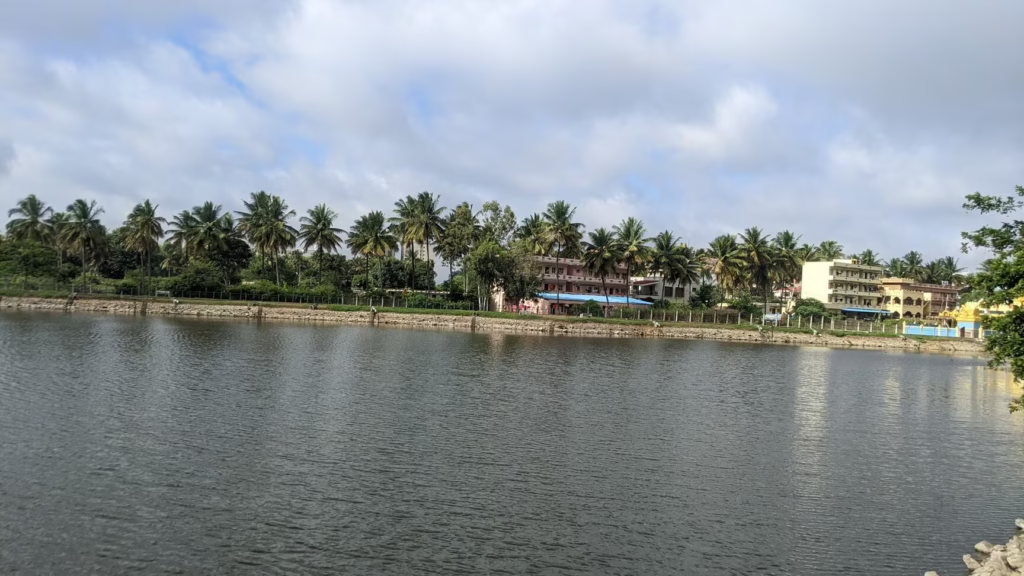
Chokkanahalli Lake: Restoration Plans & What It Means for Property Prices
Lakes that have been restored are different assets from lakes that have been left to deteriorate. A restored urban lake is a community resource — a walking track, a bird habitat, a microclimate moderator, a public amenity that lifts the value of all property that surrounds it. A neglected urban lake is a problem — a source of stagnant water, mosquito breeding, environmental concern, and a drag on adjacent property values rather than a contributor to them. For prospective buyers at L&T Thanisandra, understanding where Chokkanahalli Lake sits on this spectrum is important.
Chokkanahalli Lake today
Chokkanahalli Lake is one of the restored urban water bodies in North Bangalore. The lake has undergone significant rehabilitation work over recent years and is currently maintained as a community amenity. Features that exist or are in development include a walking track around the perimeter, vegetation that supports a healthy bird population, and active community engagement with the lake as a public resource.
How the restoration happened
Bangalore lake restoration over the past decade has typically followed a structured pattern:
- De-silting and water body restoration — removing accumulated sediment to restore lake depth and capacity.
- Boundary protection — establishing clear lake boundaries to prevent encroachment, often with fencing or formal landscaped edges.
- Sewage treatment — ensuring untreated sewage does not enter the lake, often through STP installations and stormwater separation.
- Walking infrastructure — adding a walking or jogging track around the perimeter, with seating and lighting.
- Vegetation and biodiversity — landscape planting that supports native bird and aquatic species.
- Community engagement — many restored lakes have local custodian groups that participate in ongoing maintenance and event programming.
What ongoing maintenance looks like
Restored lakes require ongoing stewardship to maintain their value as community amenities. The institutional framework for this typically involves BBMP responsibility for boundary protection and water quality, sometimes supplemented by private adoption arrangements where corporate or community partners fund specific maintenance activities. Citizen volunteer groups often play an active role in periodic clean-ups, native plant care, and event organising.
What this means for L&T Thanisandra
- The lake-facing premium is genuine — Chokkanahalli is a usable, attractive water body, not just a marketing claim.
- Residents can engage with the lake — walking track, bird watching, and community programming are part of the lifestyle.
- Microclimate benefits are real — restored urban lakes moderate local temperature and improve evening conditions for adjacent properties.
- Long-term protection — institutional framework around restored lakes provides reasonable assurance that the lake will be maintained over time.
Property value implications
Across Bangalore, properties adjacent to restored, well-maintained lakes have outperformed comparable non-lake-adjacent inventory by significant margins. The premium varies by lake quality, project quality, and corridor maturity, but is generally durable. Hebbal Lake-adjacent properties have shown this pattern over multiple decades. Chokkanahalli Lake-adjacent properties — including L&T Thanisandra — are positioned to capture similar premiums over a long horizon.
Risks to factor
While the trajectory is positive, lake restoration is an ongoing rather than a once-and-done outcome. Risks worth being aware of include:
- Maintenance funding — institutional maintenance funding can vary; community engagement helps fill gaps.
- Encroachment pressure — urban water bodies face ongoing development pressure; vigilance is required.
- Water quality fluctuations — particularly during heavy monsoon or drought periods, water quality can vary.
- Surrounding development quality — adjacent development quality affects the lake environment; high-quality projects like L&T Thanisandra are net positives, lower-quality construction nearby can be net negatives.
How to track lake health
- BBMP updates — official updates on maintenance and restoration programmes.
- Local community groups — neighbourhood lake protection groups often have current information.
- Site visits — visiting at different times of year provides direct observation of lake conditions.
- Bird population — a healthy bird population is one of the most reliable indicators of overall lake ecosystem health.
The bigger picture
Across Bangalore, the trajectory for surviving urban lakes has been broadly positive over the past decade. Public awareness of lake importance has grown, institutional commitments have strengthened, and citizen engagement has matured. Chokkanahalli Lake fits within this favourable broader pattern. For more on lake-facing properties as an asset class, see our blog Lake-Facing Apartments in Bangalore.
For the location overview, see our Location page. For project details, the Home page. To experience the lake setting first-hand, schedule a site visit.